
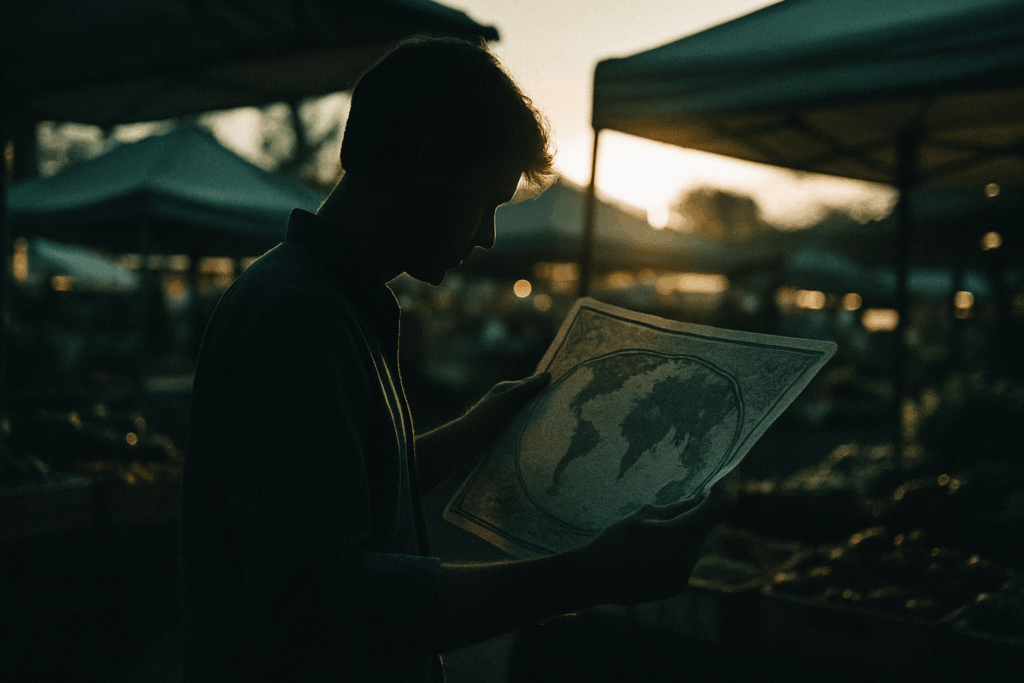
The Overlooked Power of Maps
Most people view maps as tools for finding the quickest route from Point A to Point B. But when you look deeper, maps hold far more than just roads and borders. They offer access to the cultural DNA of a place if you know how to read between the lines.
Beyond Navigation: Maps as Cultural Portals
Maps aren’t just for travelers or geography buffs. They can act as:
Gateways to hidden heritage that isn’t always marked by signs or plaques
Visual storytellers of how people live, migrate, and adapt to the land
Cultural filters that reflect what a community values or what’s been forgotten
The Land Speaks If You Listen
Terrain isn’t neutral. Hills, rivers, forests, and coastlines often hold deep cultural meaning. Every landscape feature may correspond with age old rituals, sacred spaces, or oral histories passed down through generations.
Here’s what to watch for:
Natural landmarks that double as spiritual sites
Pathways shaped by seasonal migrations or ceremonial routes
Place names that hint at stories or past functions
The Limits of Traditional Maps
Standard maps prioritize infrastructure roads, cities, political borders. While useful, they often erase or ignore intangible cultural layers:
Languages and dialects spoken in micro regions
Folklore and oral history routes passed hand to hand, not written down
Seasonal traditions that change a landscape’s meaning depending on the time of year
To truly explore hidden traditions, you have to look past the obvious lines and symbols on standard maps. Cultural discovery lies in the absence the margins, the silences, the unnamed.
Start With the Margins
The loudest culture rarely lives at the center. If you’re chasing stories with soul not just spectacle you’ll want to head away from the bold labels on the map. Lesser marked regions often carry deeper cultural weight, especially where rural or indigenous communities have kept traditions thriving under the radar.
These are places where oral stories matter more than signage, and rituals mark seasons instead of tourist calendars. The farm paths, river bens, and quiet intersections are often where you’ll find generations old foodways, music, and craftsmanship still practiced not for show but for survival.
To hunt these down, ditch the tourist guides. Study topographic and historical maps for old settlement patterns, trade routes, or spiritual gathering sites. On the digital frontier, platforms like OpenStreetMap or local GIS data often highlight landmarks missed by mainstream tools. Look for blank spaces with layered names that’s often a sign of cultural depth waiting to be traced.
Offline, ask locals or community based travel groups what’s skipped over. It’s slow travel, with a purpose. When you study the margins, you’re not just charting where people live you’re learning how they remember, resist, and rebuild.
Map Layers That Matter
Not every map shows you where the heart of a place beats. Thematic map layers those focused on intangibles like folklore, language families, and oral storytelling routes pull back the curtain on the deeper cultural currents of a region. They’re not always glossy or interactive. Sometimes they’re PDFs from heritage archives. Other times, they live on digital platforms built by small local orgs or researchers. But knowing how to read them is a skill worth sharpening. You aren’t just looking for place names you’re tracing the echoes of lived histories.
Time maps take it a step further. These show not just where something is, but what it was. Ancient pilgrim paths, old trade roads, lost dialect zones these overlays show how culture has drifted, returned, and reshaped itself. Think of them as slow motion reels playing underneath today’s navigational grids. They expand your definition of “now.”
If you’re serious about finding real traditions, dive into open source mapping platforms. Sites like OpenStreetMap often host custom cultural layers built by contributors. Others, like MapHub or layers hosted via GitHub projects, surface data on religious festivals, seasonal rituals, even defunct place names still used by locals. These tools don’t just show you where to go they show you what’s not immediately visible.
Don’t just look at maps. Learn to read them like stories, layered and unfinished.
Digital Tools That Guide Deeper
Most people use maps to get from point A to point B. But for uncovering stories buried in culture, you need tools built with different priorities. Apps like LWMF Maps, Atlas Obscura, and Local Roots are stepping up by offering uncommon cultural insights often ignored by mainstream platforms. These tools aren’t just pinning places they’re highlighting meaning.
One way to shift your perspective is to contrast travel heatmaps those bright, busy trails of tourist footfall with quieter heritage zones. Hotspots might show vibrancy, but they rarely show depth. True cultural landmarks live in shadowed corners, on non obvious routes. Overlaying heatmaps with indigenous territories, language maps, or oral history trails gives you a truer sense of place.
Local sourced contributions are the heartbeat of accurate cultural mapping. Community input ensures those maps don’t flatten culture into attractions. They add nuance ritual sites, seasonal gatherings, endangered crafts that no algorithm can guess. Platforms that welcome user annotations, photos, or voice notes are helping rewrite what belongs on the map.
To see this in action, dive into curated cultural landmarks where map data is filtered through local lenses. You’re not just navigating places; you’re reading a living archive.
Talk to the Mapmakers
Maps don’t just appear they’re shaped by people with biases, context, and priorities. Local cartographers and historians play a quiet but crucial role in deciding what a map reveals. In communities across the world, these voices decide whether a sacred grove, an oral trade route, or a forgotten festival gets etched into public geography. Often, it’s not about what exists on the ground it’s about who had the authority, insight, or funding to document it.
If you’re looking to explore cultural traditions beyond the basic tourist trail, start by tracking down region specific maps created by local institutions or historical societies. University archives, community centers, even small town libraries often hold gold: hand drawn maps, festival circuits, or layered cultural records that never made it onto Google Maps.
We spoke with Ana Orellana, a cultural geographer from southern Mexico, who curates digital and physical maps for indigenous storytelling projects. According to her, “What gets mapped is what someone decides to prioritize local dances, spiritual sites, seasonal migrations. National maps often ignore that. Our job is to put those lived experiences back on the record.”
Bottom line: Good maps echo the people who make them. If you want a view of tradition, go to the source. Skip the satellite view and ask what stories the land is already telling just waiting to be outlined.
Turn the Map into a Cultural Compass
A good map can do more than get you from A to B it can point you toward an entire community, story, or living tradition. When you zoom in on coordinates, you’re not just looking at a location. You’re looking at context. That small dot might be a village where an ancient weaving style is still taught by grandmothers, or where a mountain path doubles as a pilgrimage route during festival season.
Mapped trails aren’t just dusty historical routes. Many of them are still alive walked, celebrated, sung along. You’re following footsteps, not just facts. The real win isn’t in snapping a shot of an old temple it’s in sharing tea with someone who maintains it. The deeper the connection between what’s on the map and who’s living the culture behind it, the richer the experience gets.
It’s easy to fall into the tourist trap construction around the photogenic spot, guides reciting scripted facts, souvenir stalls selling ‘authentic’ replicas. What maps offer, if used right, is a way to sidestep all that. Look for regions that show less heat on major travel apps. Use targeted filters on cultural landmarks to spot meaningful places that locals still use.
Cultural maps should function like constellation charts each dot matters, but it’s the line you draw between them that tells the story. Don’t just go for the place. Follow the thread that ties it to people, events, and meaning. That’s how mapping shifts from navigation into something closer to discovery.
Final Navigation Tips
Maps are only half the journey. The rest comes from how you use them. Physical maps give you the lay of the land, but pairing them with social storytelling tools photo threads, short vlogs, voice memos turns your trip into something deeper. It’s not just about arriving; it’s about what unfolds along the way.
One of the smartest ways to find living culture is to track movement, not places. Migration routes, seasonal festivals, regional rituals these patterns reveal more than any city guide. They tell you when people gather, why they travel, and what they carry with them. Overlaying a basic map with these rhythms exposes intersections of people and tradition you won’t get from a top 10 list.
In the end, don’t just pin locations. Ask yourself: what’s pulling you there? A real map leads with questions, not coordinates. Travel with that kind of purpose, and you’ll walk into stories still being written.
 Ask Joseph Justusavos how they got into maps and navigation tools and you'll probably get a longer answer than you expected. The short version: Joseph started doing it, got genuinely hooked, and at some point realized they had accumulated enough hard-won knowledge that it would be a waste not to share it. So they started writing.
What makes Joseph worth reading is that they skips the obvious stuff. Nobody needs another surface-level take on Maps and Navigation Tools, Travel Guides and Tips, Destination Highlights. What readers actually want is the nuance — the part that only becomes clear after you've made a few mistakes and figured out why. That's the territory Joseph operates in. The writing is direct, occasionally blunt, and always built around what's actually true rather than what sounds good in an article. They has little patience for filler, which means they's pieces tend to be denser with real information than the average post on the same subject.
Joseph doesn't write to impress anyone. They writes because they has things to say that they genuinely thinks people should hear. That motivation — basic as it sounds — produces something noticeably different from content written for clicks or word count. Readers pick up on it. The comments on Joseph's work tend to reflect that.
Ask Joseph Justusavos how they got into maps and navigation tools and you'll probably get a longer answer than you expected. The short version: Joseph started doing it, got genuinely hooked, and at some point realized they had accumulated enough hard-won knowledge that it would be a waste not to share it. So they started writing.
What makes Joseph worth reading is that they skips the obvious stuff. Nobody needs another surface-level take on Maps and Navigation Tools, Travel Guides and Tips, Destination Highlights. What readers actually want is the nuance — the part that only becomes clear after you've made a few mistakes and figured out why. That's the territory Joseph operates in. The writing is direct, occasionally blunt, and always built around what's actually true rather than what sounds good in an article. They has little patience for filler, which means they's pieces tend to be denser with real information than the average post on the same subject.
Joseph doesn't write to impress anyone. They writes because they has things to say that they genuinely thinks people should hear. That motivation — basic as it sounds — produces something noticeably different from content written for clicks or word count. Readers pick up on it. The comments on Joseph's work tend to reflect that.